Local Public Transport – RTM
The RTM network covers different types of public transport such as the bicycle, metro, tram, bus and even boats!
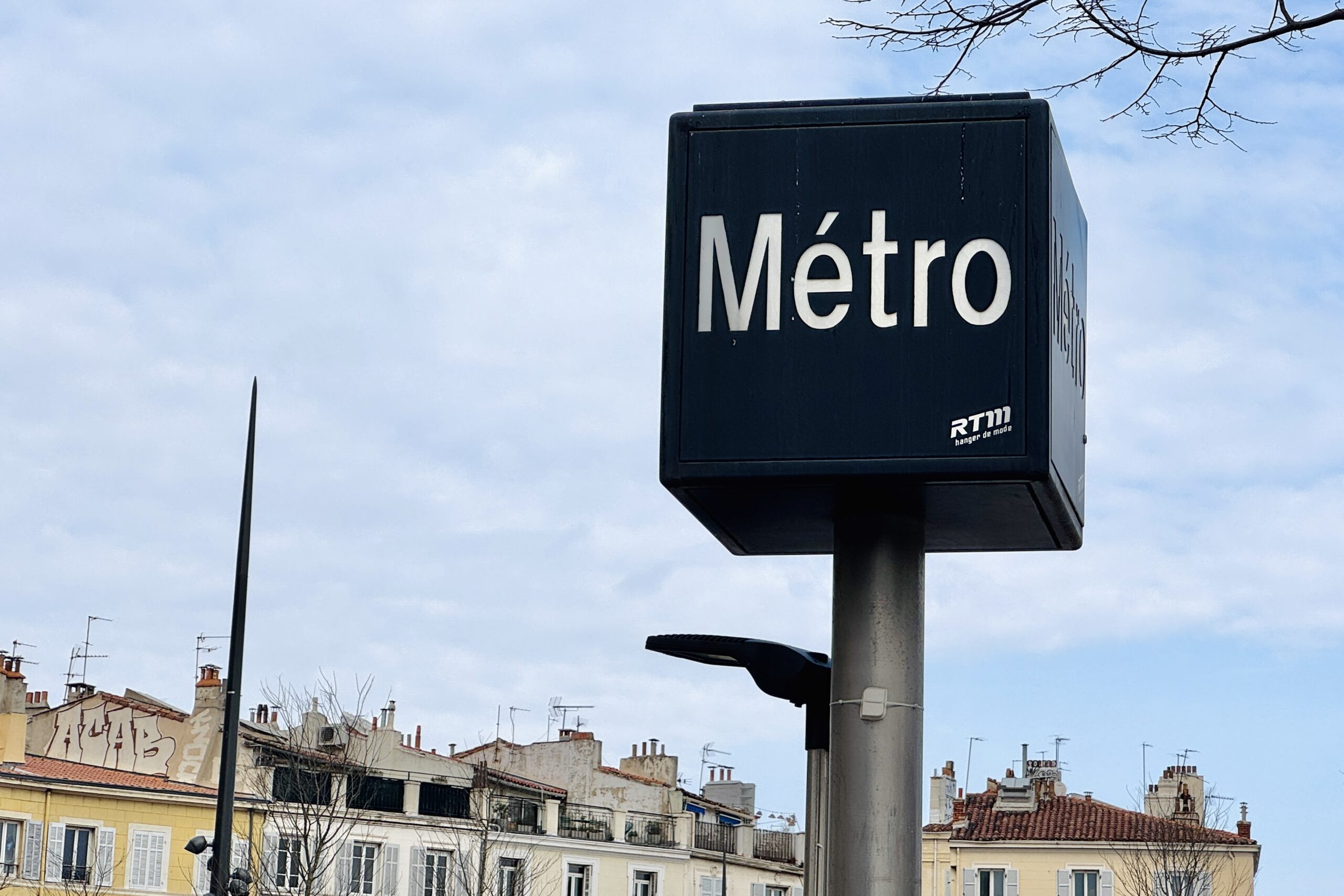
Marseille has two metro lines and three tram lines, with a fourth under construction. That might not sound like a lot for the second biggest city in France, but it does mean you can move around the city centre fairly quickly.
Make sure to consider all the different offers and fares before buying a transport pass. You can find out all about them at information points in some metro stations. There are different RTM reduced rate passes (for civic service volunteers, for example).
If you’ve been in Marseille for more than six months and you’re unemployed and receiving state benefits, the Centre Communal d’Actions Sociales (CCAS) can offer you free travel on public transport.
The city now has a huge number of bicycle docking stations. Thanks to the dedicated application, ‘Le vélo’, you can check how many electric bikes are available at each station. The ‘Le vélo’ pass costs 3 euros a month and if you have an RTM transport pass, the first thirty minutes of every journey are free.
A distinctive feature of Marseille’s public transport system are its boat buses, known as navettes maritimes. Several boats leave from the Vieux-Port (1st district) and call at Pointe-Rouge, Les Goudes, and l’Estaque. These shuttle boats run from April to the end of September. Boat rides are free with a permanent, annual, 30-day or 7-day transport pass. Otherwise, expect to pay 5 euros to ride from the Vieux-Port to Pointe-Rouge, or 8 euros if you go as far as Les Goudes.
A small bonus: a ferry–boat goes between the two banks of the Vieux-Port and costs 50 centimes or is free with a transport pass. It runs every day and leaves every twenty minutes.
If you don’t want to spend your money on transportation and you live in the centre of the city, many places can be reached on foot, if you like walking.
Practical advice:
Given that people tend to sign up for or renew transport passes in September and at the beginning and end of each month, to avoid long queues, it’s best to take care of it outside of these moments, if possible. Once your pass is ready, it will only start to work at the beginning of the following month.
You’ll need to go to a ticket office in selected metro stations to obtain your card and it’s worth asking a French-speaker to go with you to translate, if you don’t speak the language. You will usually need to provide proof of ID and a document justifying your right to a reduced rate, if you’re requesting one.
We advise you to allow extra time for your journeys as unfortunately, Marseille’s transport network does not work to its full potential and delays are frequent.
When you go out in the evenings, it’s good to remember that the metro stops running at 12.30am. If you’re the kind of person who likes to stay out late, you can wait for the first metro at 5.30am, take a night bus (some areas have them), or take an e-scooter or bike (available in the centre and nearby areas).
Smartphone applications:
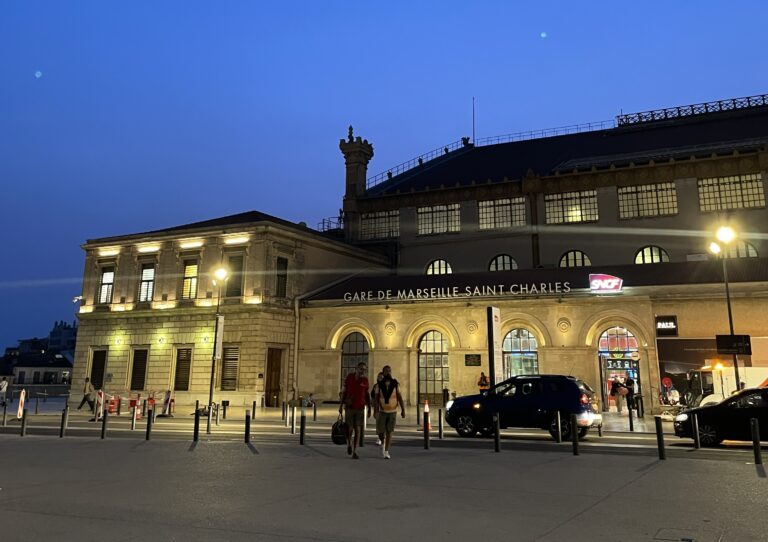
- The RTM application gives you access to public transport schedules in real time and it’s often more reliable than printed bus timetables. The average wait time for a metro is 4 minutes, or 9 minutes in the evening (from around 9.30pm). You can change from one metro line to another at two stations: St Charles and Castellane.
- The City Mapper application can be used for all means of transport and is pretty reliable about timings (on foot, by bike, e-scooter, taxi, bus, metro…). And it’s available for other cities around the world too!
If you want to travel outside of Marseille, by train or another way, check out the page ‘Other transportation’.
Header photo : Stéphane Pachot